
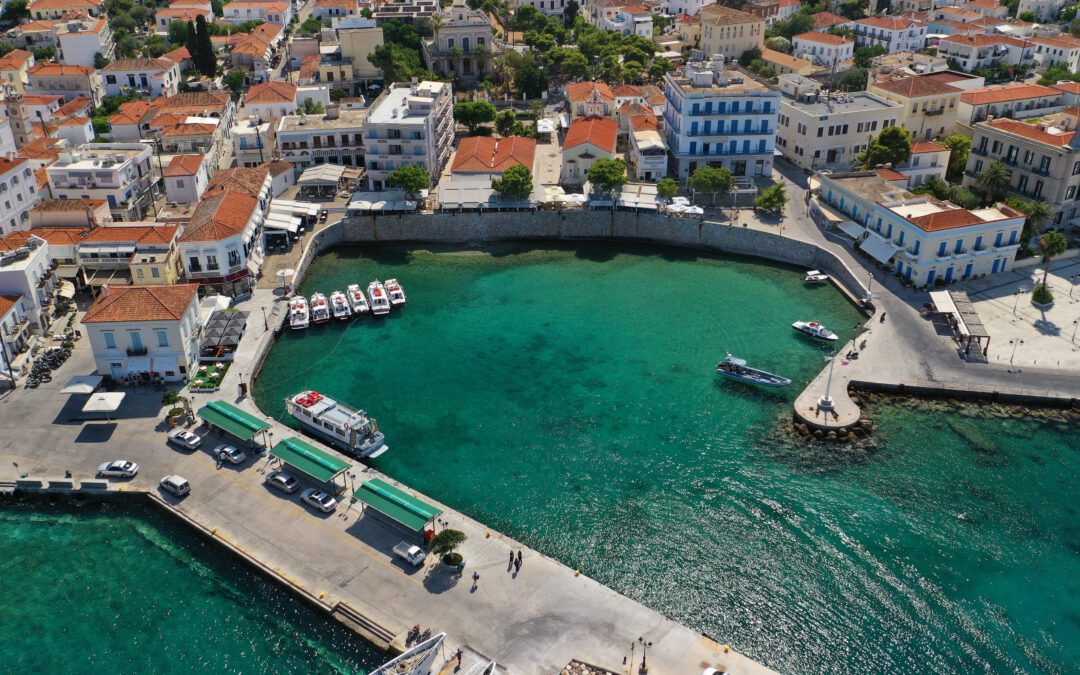
Many of you would be aware that as an accounting firm coach, consultant and mentor I often look at things around me and see ways to apply them to running a better accounting firm. Earlier this year Kate and I spent some time on a few Greek islands. One of those was Spetses and it was there that I observed something worth sharing.
From the balcony of our hotel room we looked directly at the working harbour and could see the constant movement of ferries and water taxis. And it was the water taxis that provide a great learning for accountants!
That learning is put a system in place and have everyone consistently follow it. When I say a system I’m referring primarily to the predetermined way to get each job done for your clients. I am regularly dismayed to see firms with multiple ways to do the same thing.
Surely there is a “best” way to do each task, you agree on it, then consistently use that approach. My view is that firms that don’t achieve this are not working as efficiently or effectively as they could and that chews up capacity. And the one thing most firm owners tell me they are short of is capacity. Not clients, but the capacity to get the work done for those clients.
Let me take you back to Spetses and explain how the water taxis operate. You can see from the image below that the water taxis line up at the wharf in the harbour and wait their turn for a customer.
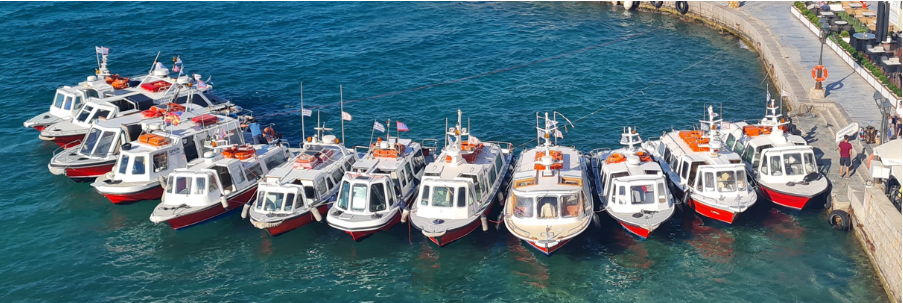
The key is that they have a system and everyone follows it. And it works beautifully! The boat closest to the wharf is tied to the wharf but it is also tied to the next boat, which is tied to the next, which is tied to the next boat, and so on. When a passenger or passengers gets onto the first boat it very quickly gets away because the agreed system goes into operation.
The skipper or deck hand (if there is one) releases the ropes tying the boat to the wharf. Simultaneously the skipper (or deckhand if there is one) of the second boat releases the rope connecting their boat to the first boat and the first boat is free to move. As soon as it is away the second boat then moves into position at the wharf effectively dragging the other boats with it. This was repeated every time because it works!
I’m not explaining this particularly well but after watching for probably a few hours I concluded there are a few key things to take away:
- Each person had an allocated role and they knew exactly what they had to do, how to do it and when to do it.
- There was a high level of collaboration and cooperation between the water taxi skippers because they know the system works
- Progress was monitored from the tent on the wharf and if it looked like something wasn’t right someone jumped in fast to fix it
- This all resulted in a great outcome for customers because the taxi leaves very promptly after they board
You might have noticed that although the taxis are similar in appearance each is unique in its own way. Despite those differences they were able to agree on a way of working that is good for everyone, including the customers.
Isn’t that we want inside our accounting firms?